

eng
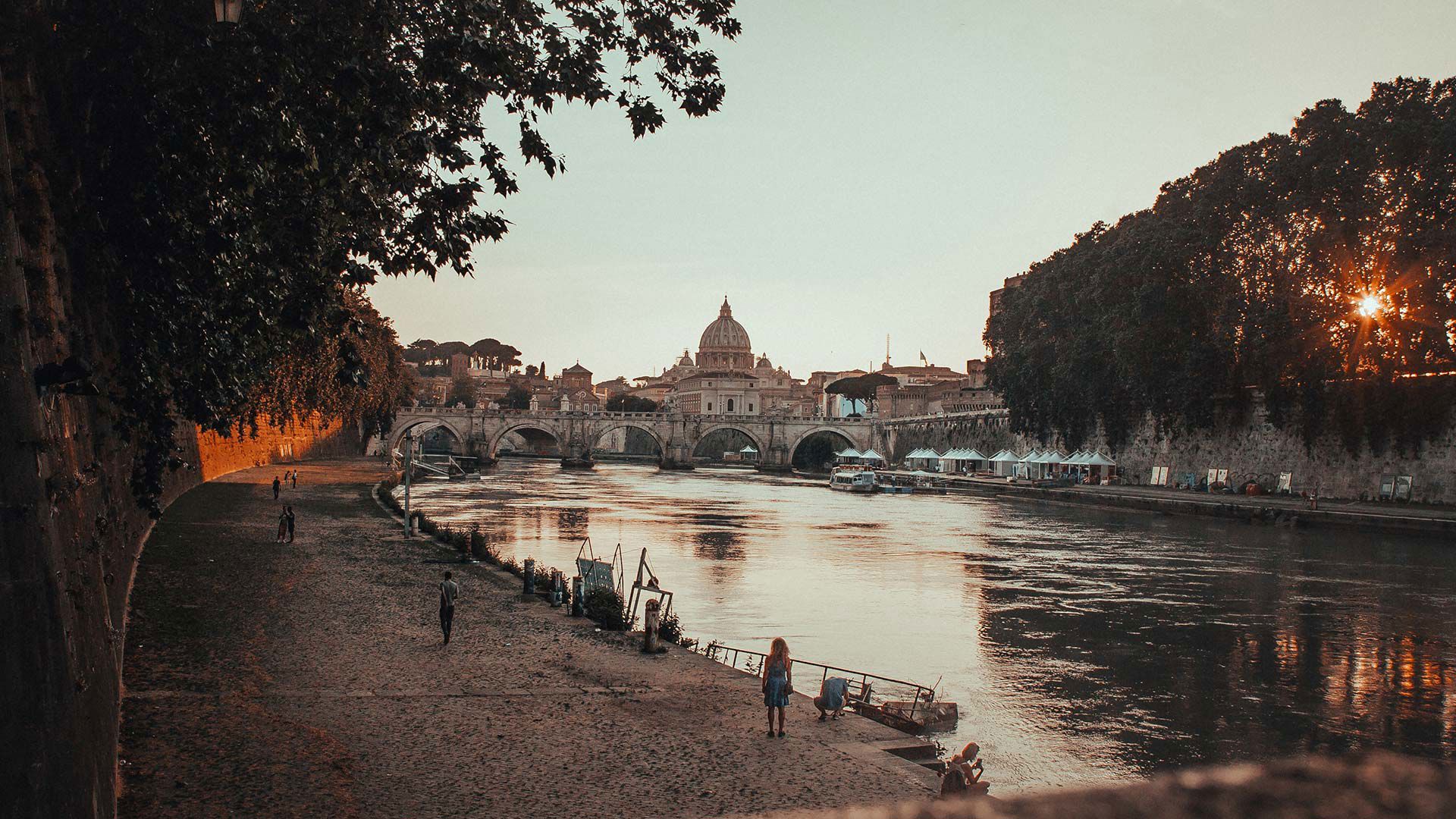
Trastevere derives its name from the Latin trans Tiberim, meaning “beyond the Tiber.”
In the past, the area was home mainly to artisans and small foreign merchants who came to Rome seeking better fortunes, drawn by the nearby river ports south of Tiber Island. Today, the district still preserves its popular character, although many traditional workshops have given way to pubs, pizzerias, and cafés that come alive especially on summer evenings. Yet, in its winding alleyways one can still breathe the atmosphere of ancient trades and traditions. This charm captivates visitors who, after crossing Ponte Garibaldi, reach the first square in Trastevere, dedicated to Giuseppe Gioachino Belli, famous for his satirical sonnets in Roman dialect.
Nearby Piazza Sonnino features the Torre degli Anguillara, the only surviving tower among the many that once stood in Trastevere. It recalls the influence of the powerful Anguillara family and is attached to the small palace of the same name, now home to the Institute for Dante Studies.
At the beginning of Viale di Trastevere stands the church of San Crisogono, repeatedly rebuilt and restored, featuring a Romanesque dome and later a portico. Following Via della Lungaretta leads to the charming Piazza di Santa Maria in Trastevere, decorated with a fountain reworked by Bernini and dominated by the Basilica of Santa Maria in Trastevere.
This extremely ancient basilica is believed to be the first official Christian place of worship in Rome. According to tradition, it was commissioned by Pope Callixtus. Inside, it preserves valuable mosaics by Pietro Cavallini, and despite Baroque additions, the building retains its medieval essence. Adjacent is the Church of Sant’Egidio, formerly part of a Carmelite convent dedicated to aiding the poor; today it hosts the Museum of Folklore, with ceramics, watercolors, prints, and manuscripts related to the popular traditions of papal Rome and to the poets Belli and Trilussa. The square dedicated to Trilussa lies just beyond Ponte Sisto, built to connect Trastevere to the rest of Rome, and is now a lively gathering spot for young people.
Along Via della Scala stands the Church of Santa Maria della Scala: its modest façade conceals a richly decorated Baroque interior.
Continuing along the same street, at the corner with Via della Lungara, one reaches the house of the beautiful model loved by Raphael, known as the Fornarina, the baker’s daughter.
Returning to Viale di Trastevere, behind Piazza Mastai, one arrives at Piazza Santa Cecilia, dominated by the church of the same name. The church, featuring a spacious courtyard and garden, dates back to the 5th century and has been rebuilt several times in honor of the noble martyr Cecilia. The last major reconstruction occurred in the 9th century after her body—miraculously preserved—was discovered in the Catacombs of San Callisto. A century later, the miracle was again witnessed by Stefano Maderno, who sculpted the tomb statue still visible beneath the main altar.